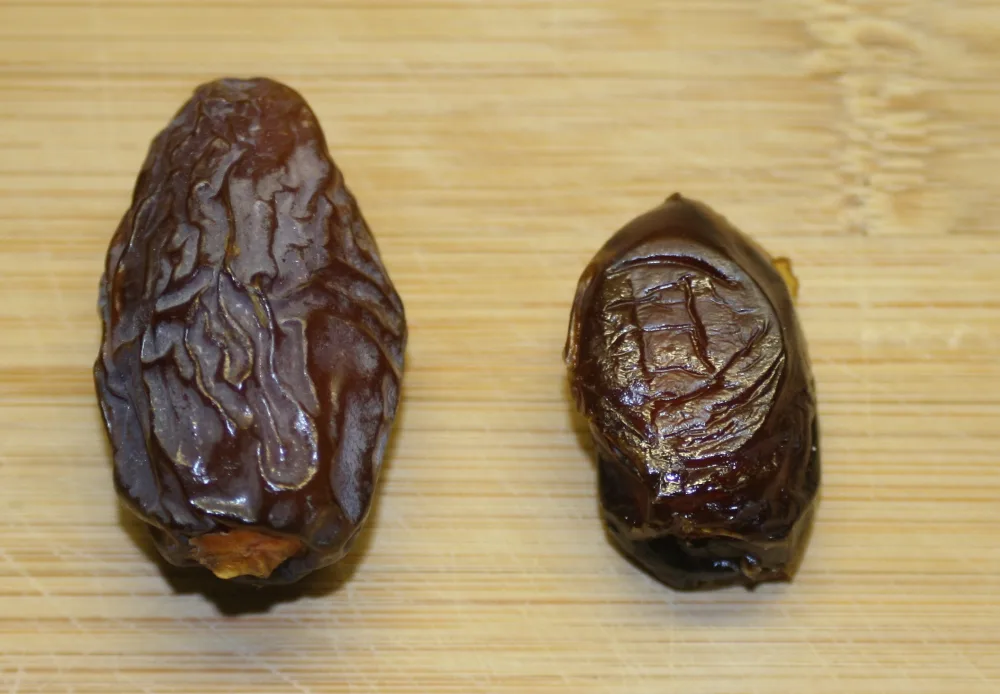
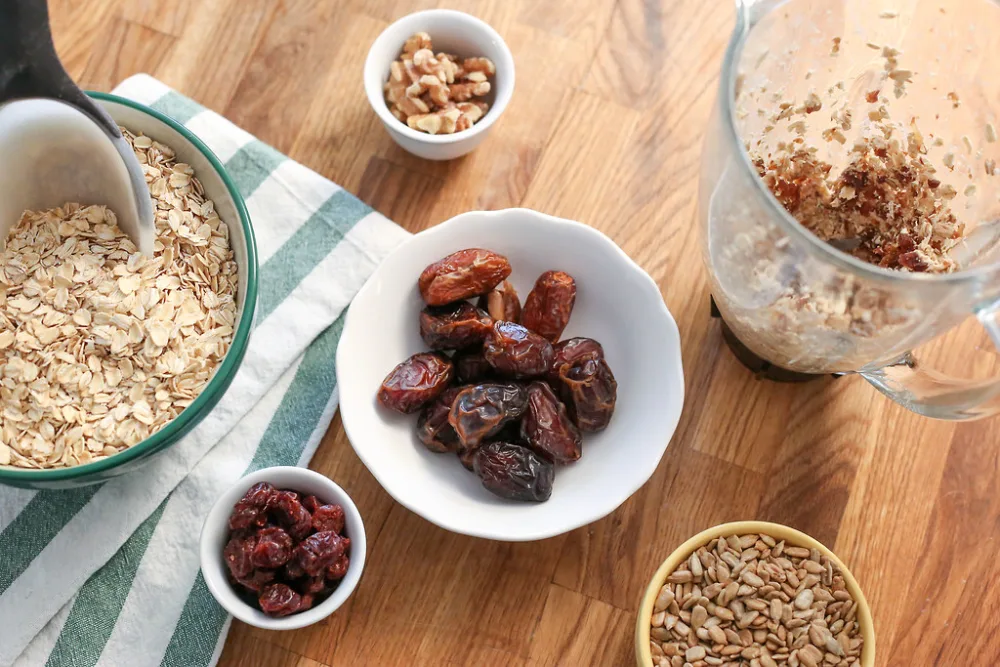
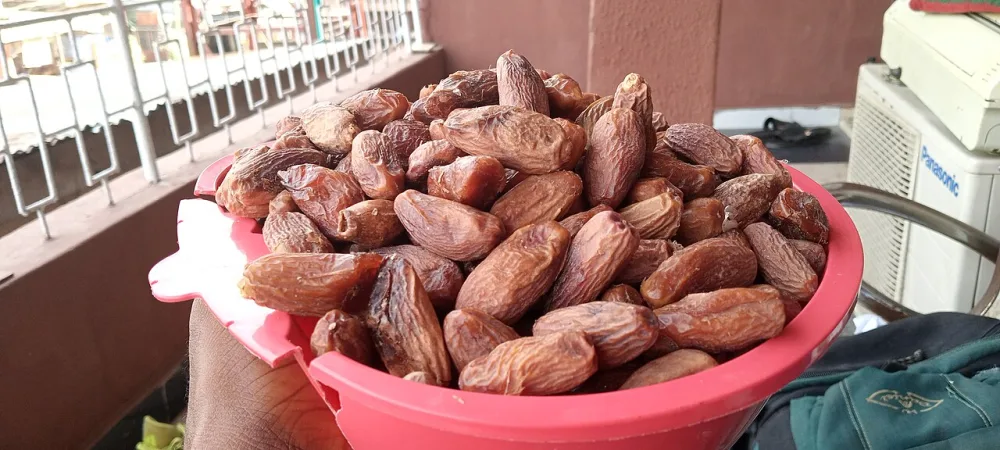
Every Ramadan, mosques, prayer rooms, and pesantren in Bekasi prepare takjil for congregants breaking their fast. Dates are the top choice because they are a Sunnah for breaking the fast, rich in quick energy, and practical to distribute. Media such as iNews and Okezone consistently place dates on the list of most-recommended mosque takjil menus. For takjil committees and pesantren administrators, the challenge is calculating needs, managing budgets, and ensuring supply does not run out mid-month. This article is a practical procurement guide for dates for mosques and pesantren in Bekasi.
Why Are Dates Ideal for Mass Takjil?
Beyond their Sunnah value, dates excel nutritionally and logistically. Per Indonesia's Health Ministry (Kemenkes) data and scientific journals, dates are high in natural sugars (about 71-81% dry weight), contain fibre (~7 g per 100 g), potassium, and vitamin B6, restoring energy quickly after a full day of fasting. Logistically, dry dates keep well, do not spoil easily like fried snacks, and are easy to distribute without cooking equipment — ideal for large numbers.
Takjil Date Needs Calculator
A common benchmark is 3 dates per person (following the recommendation to break the fast with an odd number). From 1 kg of dates, the count varies by variety and grade — small dates can be 90-120 pieces/kg, large dates 40-60 pieces/kg. Use the table below as an estimate.
| Number of Congregants | Pieces Needed (3/person) | Estimated Dates (small ~100 pieces/kg) | Estimated 10 kg Cartons |
|---|---|---|---|
| 50 people | 150 pieces | ~1.5 kg | Under 1 carton |
| 100 people | 300 pieces | ~3 kg | Under 1 carton |
| 300 people | 900 pieces | ~9 kg | ~1 carton |
| 500 people | 1,500 pieces | ~15 kg | ~1.5 cartons |
| 1,000 people | 3,000 pieces | ~30 kg | ~3 cartons |
For the whole month (30 days), multiply daily needs by the number of days. For example, 300 congregants x 30 days needs about 270 kg or ~27 cartons of 10 kg. Order well ahead because BPS records a demand surge in the five months before Ramadan.
Takjil Date Budget Estimates
For mass takjil, economical varieties are the wisest choice. Here are estimates using indicative 2026 wholesale prices.
| Variety | Wholesale / kg | Cost for 30 kg (300 congregants, 1 day) |
|---|---|---|
| Egyptian (Golden Valley) | ~Rp40,000 | ~Rp1,200,000 |
| Khalas (UAE) | ~Rp55,000 | ~Rp1,650,000 |
| Tunisia (Deglet Noor) | ~Rp65,000 | ~Rp1,950,000 |
| Sukari | ~Rp80,000 | ~Rp2,400,000 |
For donations or limited funds, Egyptian dates and Khalas give the best quantity-to-cost ratio. If you want higher flavour quality for special events (such as a large communal iftar), Sukari is worth the extra cost.
Bulk-Buying Tips for Mosques & Pesantren
- Order collectively for a full month at once: the per-kg price is lower and stock is assured.
- Choose dry dates for durability: Egyptian, Khalas, and Tunisia keep well without large refrigeration, suiting a mosque storeroom.
- Request grade A quotes: for mass takjil, a small grade is sufficient and far more economical.
- Arrange proper storage: keep in a sealed, dry, cool container; away from humidity to prevent mould.
- Coordinate delivery schedules: for pesantren in Cikarang or Tambun, scheduled delivery ensures stock arrives before Ramadan.
Reliable Institutional Supply in Bekasi
Large mosques in Bekasi, as reported by Pojok Bekasi, regularly distribute hundreds of takjil packs for congregants and travellers — a scale that demands stable supply and efficient wholesale pricing. As an importer with 40+ years of sourcing heritage and a Cakung warehouse close to all of Bekasi, we serve institutional procurement at first-hand prices with scheduled delivery, so committees need not worry about running out at the Ramadan peak. For planning, also see our wholesale guide and price list as a basis for budgeting.
Serving Takjil Dates Hygienically
Distributing dates to hundreds of congregants demands attention to hygiene so the takjil is safe to consume. Some recommended practices: wash hands or use gloves when arranging dates; if dates are served openly, cover them with a clean lid to keep out dust and flies; for mass distribution, pack dates in small portions (such as 3 pieces per plastic pack) so fewer hands touch the same pile. Also provide adequate bins for date pits. With tidy management, takjil dates not only fulfil the Sunnah but also protect congregants' comfort and health. For a more formal communal iftar, dates can be served on small plates alongside water or warm tea per the breaking-fast tradition.
Combining Dates With Other Takjil Items
Dates rarely stand alone as takjil; they usually open the meal before other dishes. Media such as Detik and Okezone note popular mosque combinations: dates as the opener, followed by kolak, fruit punch, fried snacks, or porridge. This pattern aligns with the recommendation to break the fast gradually — starting with something sweet and light like dates, then heavier food. For committees, this means dates need only be provided in small portions per person as an opener, keeping the date budget under control while side dishes fill the larger caloric need. This approach also makes takjil feel complete without overloading a single budget line.
Date Donations: Ramadan Endowment and Charity
Many Bekasi residents wish to contribute to mosque takjil programmes through date donations. This is a highly recommended form of charity during Ramadan, especially as feeding someone breaking their fast has its own merit in Islamic teaching. For individuals or companies wishing to donate, buying dates by the carton directly from an importer gives greater donation value because the per-kg price is lower — meaning more congregants reached on the same budget. Mosque committees can facilitate this by opening a structured date-donation programme, recording monthly needs, and coordinating collective purchases. In this way, the spirit of sharing among Bekasi residents is channelled efficiently and on target throughout the holy month.
Closing
Date procurement for mosques and pesantren in Bekasi can be planned neatly: calculate needs per congregant, choose economical varieties such as Egyptian or Khalas, order in bulk for a full month, and ensure proper storage. With this planning, takjil dates are always available throughout Ramadan without bloating the budget. This note is educational; quantities and costs are estimates that adjust with grade, variety, and market prices at the time of ordering.